
New Release: Round Time Machine Split
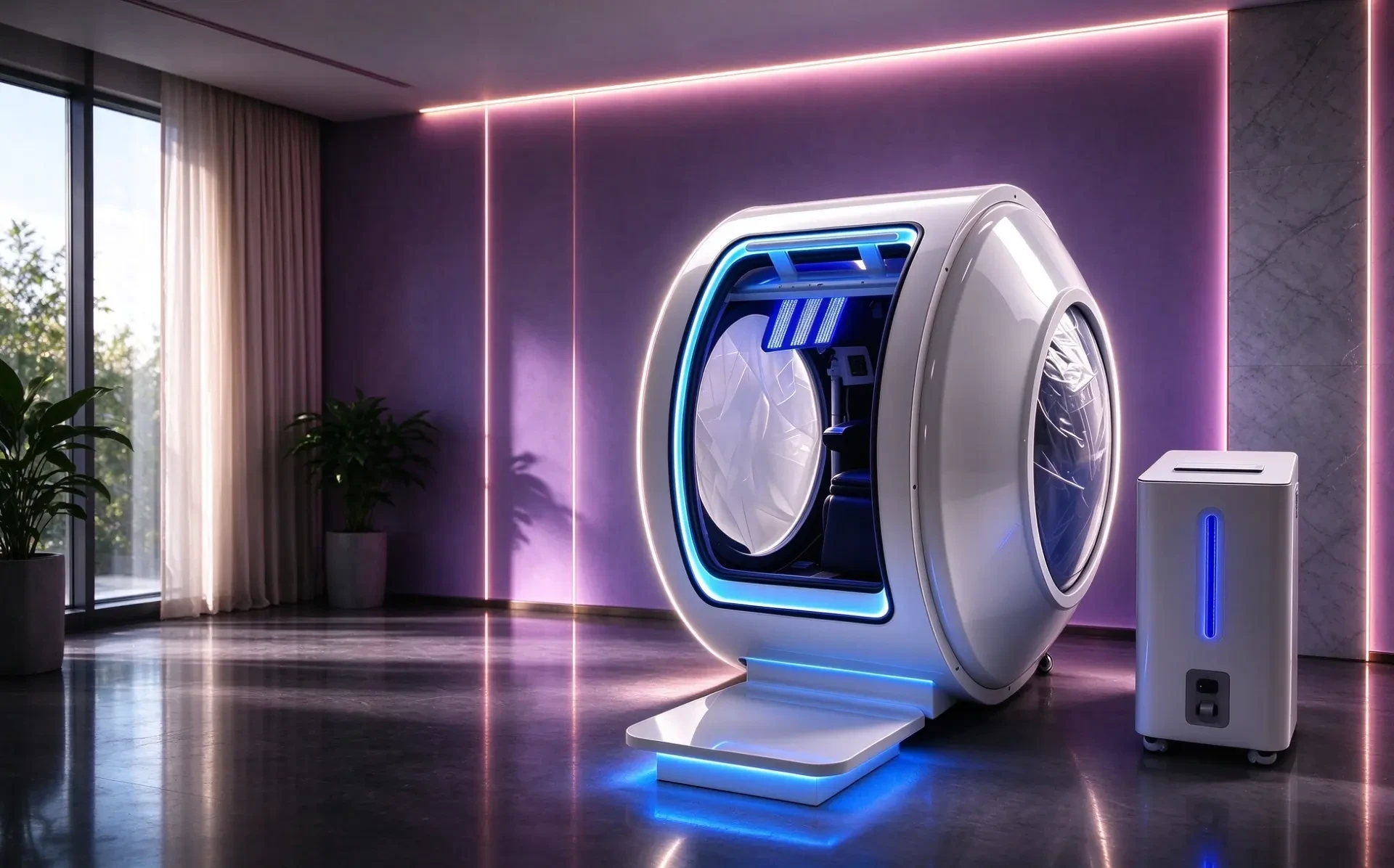
The round cabin features a split-body design, reaching 15 minutes at 1.9ATA, equipped with a 20-liter medical oxygen concentrator and BIBS system. It includes detachable sides with large polycarbonate windows on both sides, and the overall dimensions are 1950×1750×1270mm.
Hyperbaric oxygen chambers have seen little design evolution in recent years, with most models still following the traditional horizontal layout. Our new product breaks from this convention with a structure optimized for real-world use: a cylindrical chamber with removable side panels and a large 1000mm polycarbonate window. Overall dimensions are 1950×1750×1270mm, designed for both residential villas and institutional settings. This article focuses not on aesthetics, but on the trade-offs behind the specifications.
15 minutes pressurized to 1.9ATA. Time is engineered.
Cabin pressure is 1.9ATA, equivalent to an additional ~0.9 atmospheres above standard atmospheric pressure. This value falls within the mild hyperbaric range, a common operating pressure setting for home and wellness facilities.
What truly affects comfort is the rate of pressure increase. The new model takes 15 minutes to go from ambient pressure to 1.9ATA, with a gradual ramp-up. This is because the human body's ability to equalize pressure in the middle ear and sinuses is limited; rapid changes can cause ear discomfort. By keeping the pressure change rate within an acceptable range, users can maintain balance through swallowing or chewing.
This time parameter also determines the schedule for a single session. A full treatment cycle is 60 minutes: pressurization for 15 minutes, stabilization for approximately 30 minutes, and depressurization for 15 minutes. The facility's two-chamber scheduling can generally follow an hourly rhythm.
Oxygen source and breathing method: 20 L medical oxygen concentrator with BIBS system
The core of an oxygen chamber isn't the chamber itself, but the oxygen source and gas delivery system. The new model features a built-in 20-liter medical-grade oxygen concentrator that works in combination with a BIBS respiratory system, allowing users to inhale high-concentration oxygen through a mask inside the chamber.
This combination reduces the time to raise blood oxygen levels. Pressurizing the cabin increases oxygen partial pressure, while the mask delivers supplemental oxygen, creating a synergistic effect that allows users to feel changes in blood oxygen saturation quickly. A key advantage of the BIBS system is its independent breathing circuit: exhaled gas is vented separately, preventing an overall rise in cabin oxygen concentration and enabling more precise gas control.
The oxygen generator and chamber are assembled and tested within the same gas circuit system—a practice we've maintained consistently. By keeping the chamber structure, gas circuit, and consumables in a unified supply chain with standardized interfaces, we eliminate the need for cross-factory coordination during maintenance.
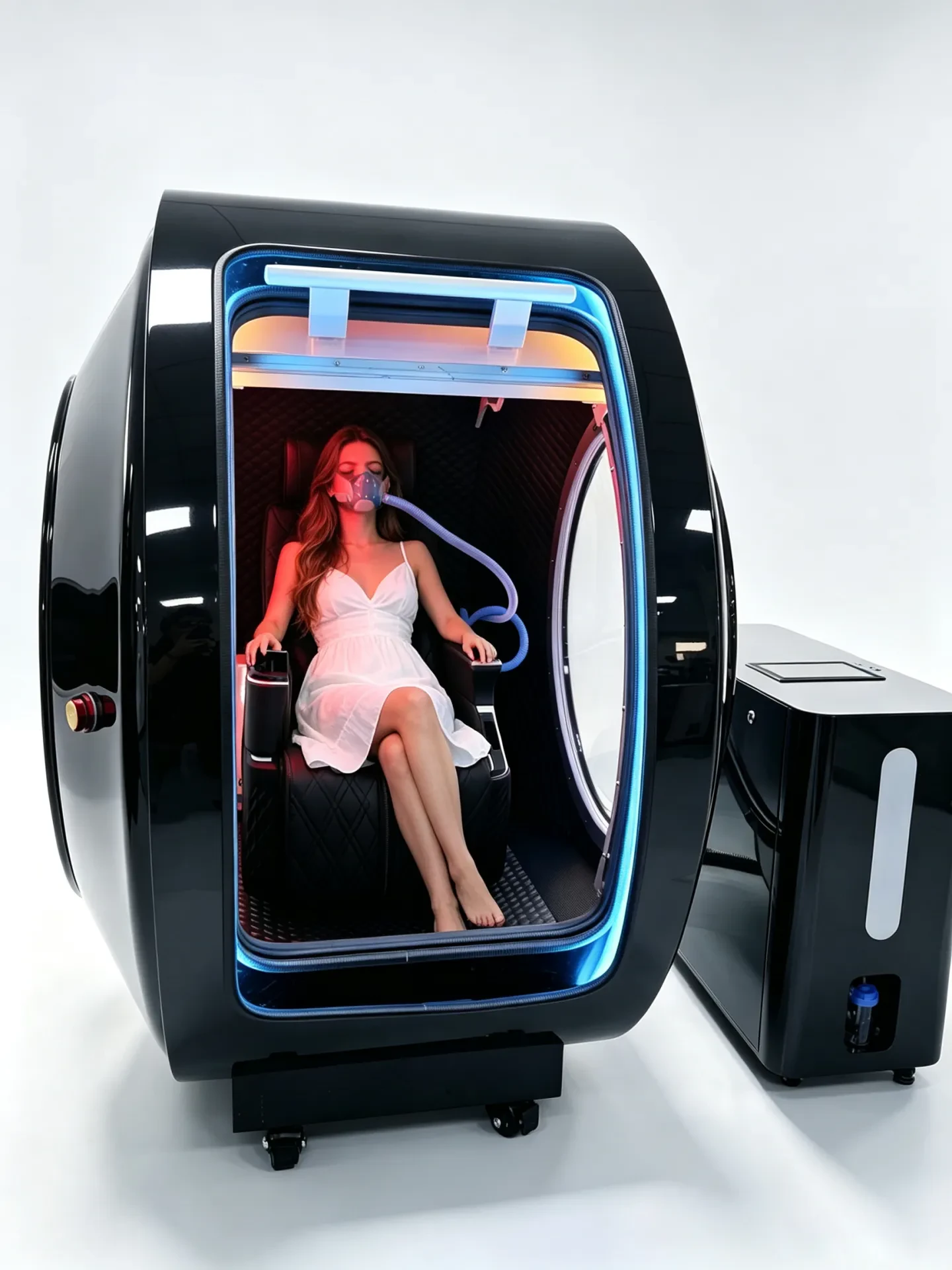
Cabin structure: Removable sides and 1000mm large windows
Overall dimensions: 1950×1750×1270mm. Prioritized by space usage: length accommodates seating and legroom, width determines side wall removal options, and height fits standard door frames.
Detachable on both sides—this is the most practical upgrade in this generation's design. During transport, it can be split to fit through narrow doorways without demolishing walls; after installation, the modules are reconnected and assembled. For stairwells in villas or standard rooms in institutional buildings, this feature often matters more than the cabin's overall dimensions. The disconnection points use the same modular connectors as the assembled version. After reassembly, airtightness testing must be performed; each unit undergoes individual testing at our factory with records kept for every piece.
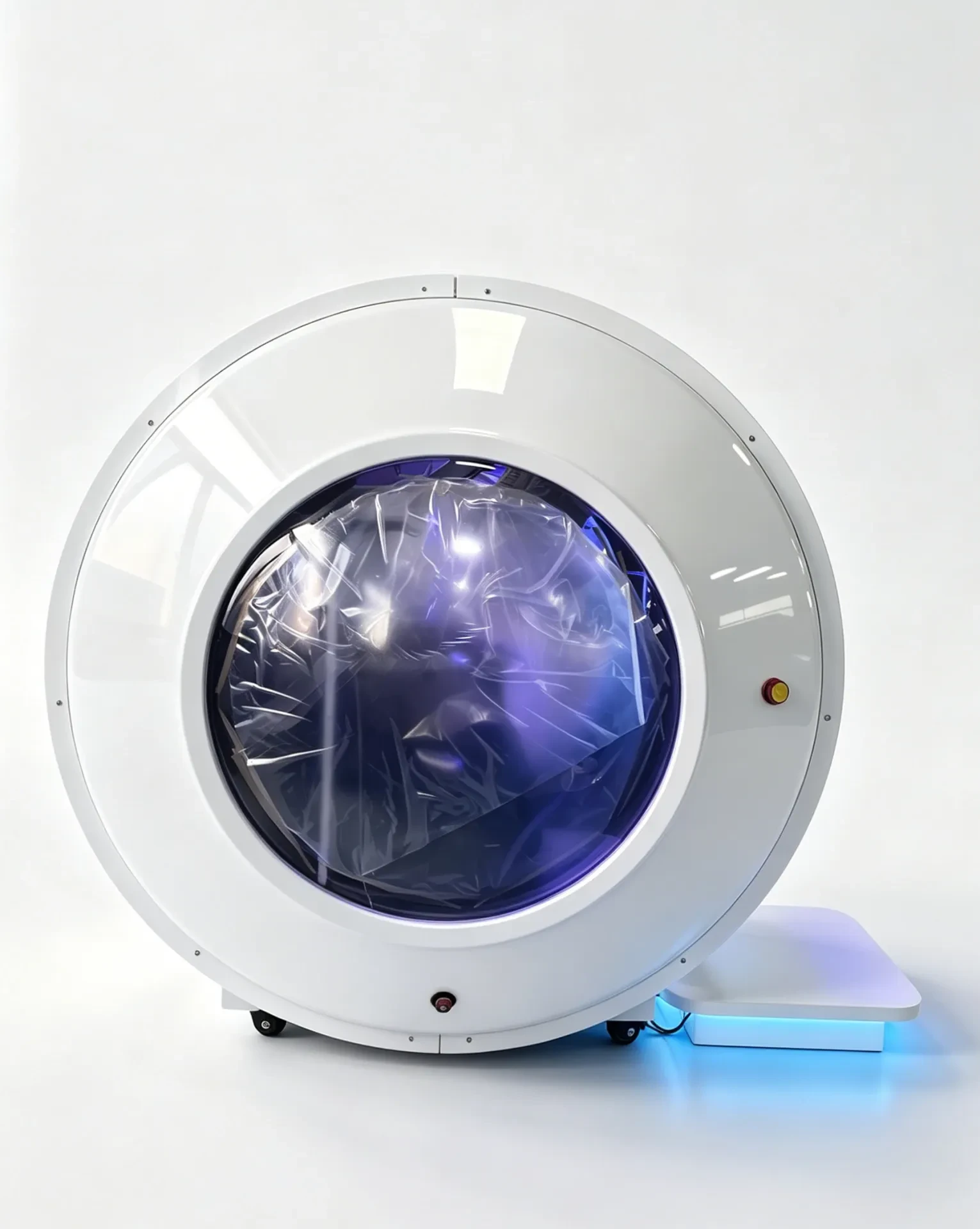
Each side features a 1000mm-inch polycarbonate window. Polycarbonate offers higher impact resistance than standard acrylic and resists yellowing or cracking under long-term pressure. These large windows serve more than an aesthetic purpose: given the enclosed cabin space, the visible area directly affects user stress levels and allows operators outside to clearly monitor usage status.
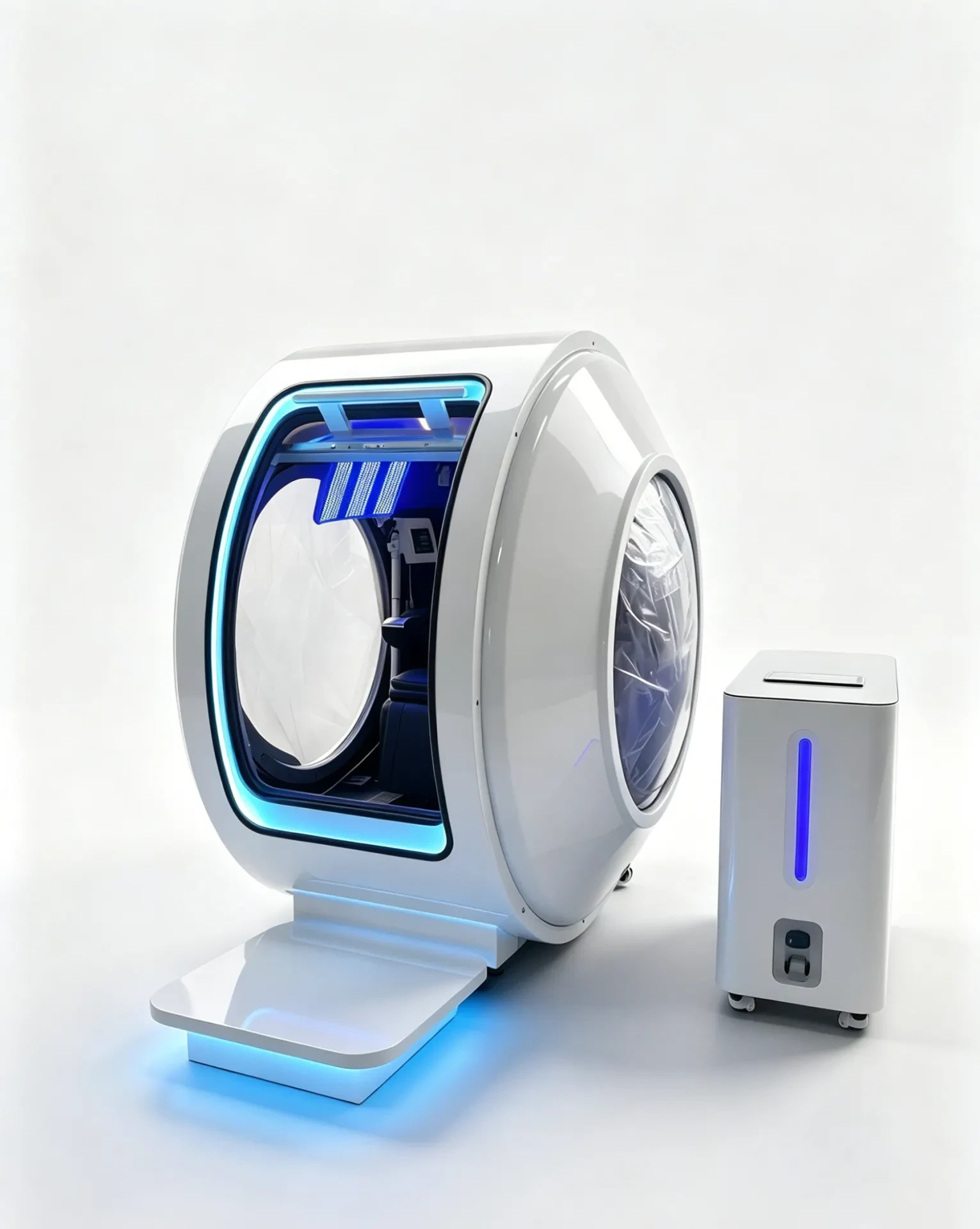
Safety & Power Consumption: Automatic pressure release on power loss; 2 kWh/hour
The primary principle of pressure equipment is controlled failure. The new product features a dual-protection mechanism with independent monitoring for both pressure and the safety valve; any anomaly in either path triggers pressure relief. In the event of a power outage, the response is direct: the solenoid valve opens automatically upon de-energization, allowing internal pressure to return to ambient levels at a preset rate without relying on backup power.
Hourly energy consumption is 2 kWh. Based on 4 hours of daily operation, daily usage is approximately 8 kWh. This scale eliminates the need for additional capacity in villa settings and simplifies cost tracking for institutional use.
Who is this for?
For villa settings, installability and daily power consumption are key; the detachable design aligns with 2 kWh hourly power usage. For institutional settings, continuous operation and scheduling efficiency matter most; 15-minute boost-up and dual-chamber cycles can run in parallel. The entire system supports custom manufacturing based on room dimensions and occupancy. Channel partners require OEM branding solutions, with appearance and brand elements fully customizable.
The new product is now in production and quality inspection. Each unit undergoes airtightness and operational testing after cabin machining and pneumatic assembly are completed. To design a customized solution for your room, please provide the number of users, net dimensions, and desired configuration; this will determine the appropriate cabin model and specification list.